Ecommerce Website Templates: 9 Best Picks to Sell From $19 (2026)
Ecommerce website templates are the fastest, most affordable way to launch a beautiful online store and start selling from just $19 with no monthly fees and no per-sale commissions eating into your margins. Instead of paying a hosted platform $30 to $300 every month before you’ve sold a single item, you buy a professionally designed store once, own it forever, and keep 100% of your profit.
In this guide we’ll cover what these templates are, what a great online store actually needs, how the costs compare, the conversion features that matter, the best niches, a simple launch plan, mistakes to avoid, and answers to the questions shoppers ask most.
What are ecommerce website templates?
Ecommerce website templates are ready-made online store designs complete with product grids, shopping carts, checkout layouts, category pages, and product detail pages all built for you. You simply add your products and branding, connect a payment option, and start selling.
Think of a template as the entire storefront, designed and coded, waiting for your products. You don’t need to hire a developer or learn to design from scratch. A good template gives you a polished, conversion-ready store in hours instead of weeks, which is why so many new sellers start here.
What a great online store needs (checklist)
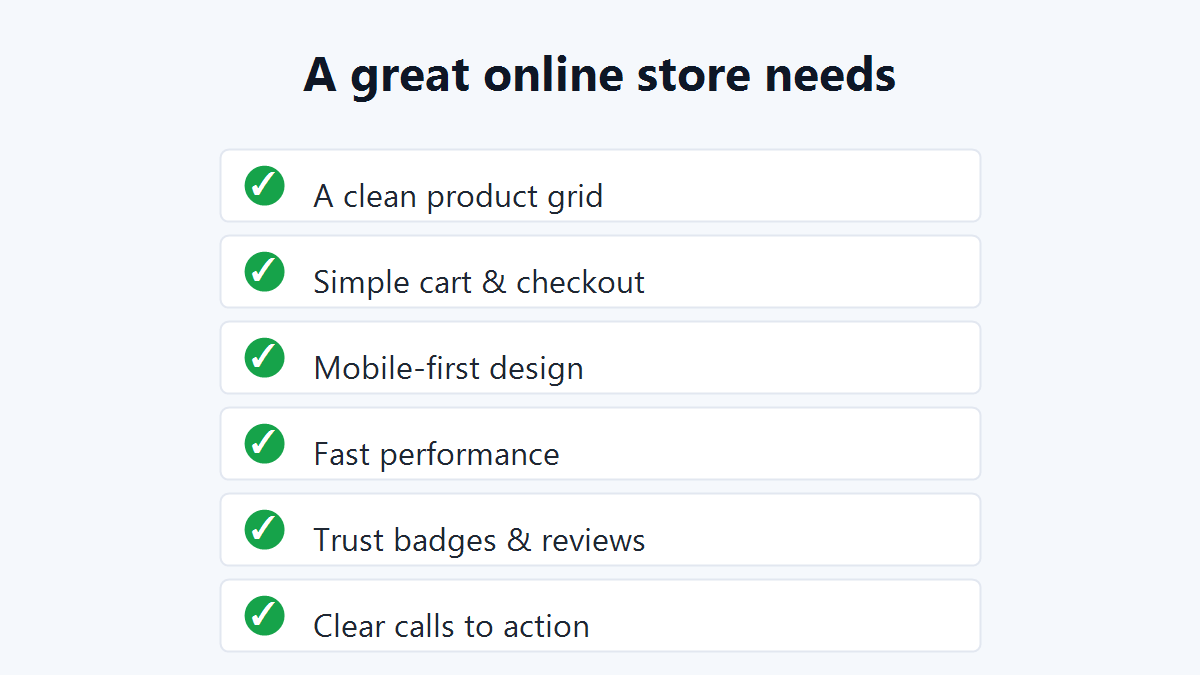
Before you choose a template, make sure it nails the fundamentals that turn browsers into buyers. Use this quick checklist:
- A clean product grid: that makes items easy to scan and compare.
- A simple cart and checkout: with as few steps as possible.
- Mobile-first design: most shopping now happens on phones.
- Fast performance: so pages load before shoppers lose patience.
- Trust badges and reviews: to reassure first-time buyers.
- Clear calls to action: on every product page.
- High-quality image support: with zoom and multiple angles.
- Search and filtering: so visitors find what they want fast.
Every one of the ecommerce templates at Themestations is built with these conversion essentials in mind, so you’re not patching gaps after launch.
Templates vs. hosted platforms on cost
This is where ecommerce website templates really shine. Hosted store platforms charge a recurring subscription often $30 to $300 per month plus transaction fees on every order. Those fees quietly compound month after month, year after year.
A one-time template flips the math: you pay once, own the design, and keep every dollar of your margin. Consider a store doing modest sales. On a hosted plan you might pay $79/month plus 2% per transaction easily $1,000+ a year before you profit.
A $19 template costs you that $19 once. For new and growing stores, the savings are dramatic.
You’ll still pay for hosting and a domain, but those are cheap commodity costs you control. To compare how the major hosted services price their plans and fees, you can review the official details on Shopify and weigh them against a one-time purchase.
There’s also a freedom factor that’s easy to overlook. When you own your template files, you can move hosts, redesign pages, and customize anything without asking permission or hitting a paywall. Hosted platforms often lock advanced features behind higher tiers, so the more you grow the more you pay.
With ecommerce website templates, growth doesn’t punish you your costs stay flat while your revenue climbs. That predictability matters most in your first year, when every dollar counts and cash flow is tight.
Conversion features that sell more
Great design isn’t just about looking nice it’s about moving visitors toward checkout. The best ecommerce website templates bake in conversion features that quietly lift your sales:
- Sticky add-to-cart buttons: that stay visible as shoppers scroll.
- Product badges: like “Best Seller” or “Low Stock” to create urgency.
- Related products and upsells: to raise average order value.
- One-page or express checkout: to cut abandonment.
- Social proof: star ratings, customer photos, and testimonials.
When these elements are designed in from the start, you spend less time fixing your funnel and more time fulfilling orders. The difference between a template that simply displays products and one engineered to convert can be the difference between a hobby and a real income.
Pay attention to how a demo store guides you from the homepage to the cart that flow is what your own customers will follow every single day.
It’s also worth checking how the template handles trust. Shoppers buying from a store for the first time look for signals that you’re legitimate: visible return policies, secure-checkout cues, contact details, and genuine reviews.
The best ecommerce website templates give all of these a clear home in the layout, so you’re not bolting them on awkwardly later. Small touches like a money-back guarantee badge or a visible support email can measurably lift conversions, especially for newer brands without a long track record.
Best niches for ecommerce website templates
The right look depends on what you sell. Ecommerce website templates come tuned for different markets, and matching the style to your niche makes your store feel instantly credible:
- Fashion and apparel: large lifestyle imagery, lookbooks, and minimal layouts.
- Electronics and gadgets: spec tables, comparison views, and bold product shots.
- Food, beverage, and grocery: appetizing visuals and quick reorder flows.
- Home, furniture, and decor: roomy galleries and category browsing.
- Beauty and cosmetics: clean palettes and ingredient-focused detail pages.
- Handmade and single-product brands: story-driven, focused landing layouts.
You can recolor and rebrand any template to match your identity, so even a general-purpose store design can be tailored to your niche in minutes.
How to launch your store in 5 steps
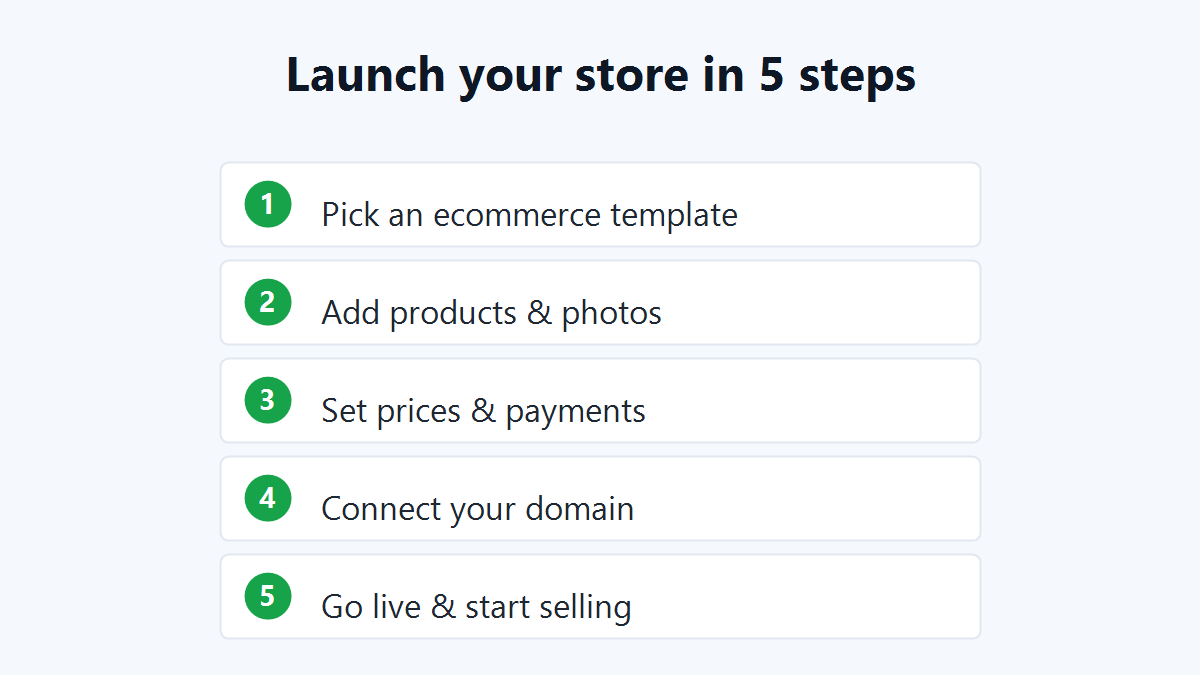
Going live with ecommerce website templates is straightforward. Here’s the simple path from purchase to first sale:
- Pick an ecommerce template: that matches your products and brand vibe.
- Add your products and photos: names, prices, and clear descriptions.
- Set up prices and payments: with your preferred provider or checkout link.
- Connect your domain: and upload the files to your host.
- Go live and start selling: then test the full checkout yourself.
Most sellers complete this in an afternoon. Browse the full collection of all templates if you want to see other styles before you commit.
Mistakes to avoid when choosing a template
A little caution up front saves headaches later. Steer clear of these common pitfalls:
- Ignoring mobile: if it doesn’t look great on a phone, you’ll lose most buyers.
- Choosing on looks alone; confirm the cart, checkout, and forms actually work.
- Overlooking page speed: heavy, bloated templates cost you sales.
- Skipping the license check: make sure commercial use is allowed.
- Cramming too many products: on one page without filtering or search.
Pick a template with clean, fast code and a clear license, and you’ll avoid the most expensive mistakes new store owners make.
How much do ecommerce website templates cost?
Pricing is refreshingly simple. At Themestations, complete ecommerce website templates start at just $19 as a one-time payment yours forever, with no subscription and no commission on your sales.
Compare that to the hundreds or thousands of dollars per year a hosted platform can cost, and the value is obvious. You invest once in a professional design, then put your budget toward products, ads, and growth instead of monthly software bills.
Frequently asked questions
Can I sell products with ecommerce website templates instead of a platform?
Yes. You connect a payment provider or a checkout link, and the template handles the storefront, cart, and product pages. You avoid monthly platform fees and per-sale commissions entirely.
Are ecommerce website templates mobile-friendly?
Quality templates are fully responsive, which is essential since the majority of online shopping now happens on phones. Always preview a template on mobile before you buy.
Do I need coding skills to use a template?
No. You add products, swap images, and edit text all without writing code. Basic familiarity with uploading files to a host is helpful but easy to learn.
How much do ecommerce website templates cost?
At Themestations, complete store designs start at $19 a one-time payment, yours forever, with no recurring fees.
Can I customize the design to match my brand?
Absolutely. You can recolor, change fonts, swap logos, and rearrange sections so the store reflects your brand and niche.
Start selling today
The right ecommerce website templates get your store online fast, keep your costs low, and let you keep every dollar you earn. For as little as $19 one time, you can launch a modern, mobile-first store that’s ready to convert. Browse ecommerce templates from $19 → and open for business this week.
Ready to launch your own site?
Browse 100+ premium website & Shopify templates — one-time, from $19.
Browse all templates →